
About
IEEE ZSB RAS is the Robotics & Automation student chapter at Zagazig University, led by a dedicated board of track heads in Embedded Systems, ROS, Mechanical Design and PCB Design. We deliver hands-on workshops—from microcontroller programming and Gazebo simulations to advanced control algorithms—and organize season-long competitions like FFR and MATE ROV to sharpen skills and secure top regional rankings. Through collaborative projects, technical seminars and industry mentorship, we turn curiosity into capability, preparing members to innovate, compete and lead in the rapidly evolving field of robotics and automation.
Mission
Our Mission is to empower and guide our members along the path of robotics and automation by providing hands-on experience, fostering a deep understanding of core concepts, and preparing them to excel in competitions. We are dedicated to building their knowledge in related fields such as PCB design, embedded systems,ROS, and mechanical design. Through continuous learning, practical projects, and supportive mentorship, we aim to cultivate skilled, innovative, and confident robotics enthusiasts.
Vision
Our vision is to become the premier hub for robotics and automation—where passionate members evolve into technically-adept professionals and fierce competitors. We inspire curiosity and drive innovation, cultivating a collaborative spirit that not only advances cutting-edge research but also secures top honors in local and regional competitions. By fostering technical excellence, strategic teamwork, and a winning mindset, we prepare our members to lead—and triumph—in the global robotics community.
Chapter News
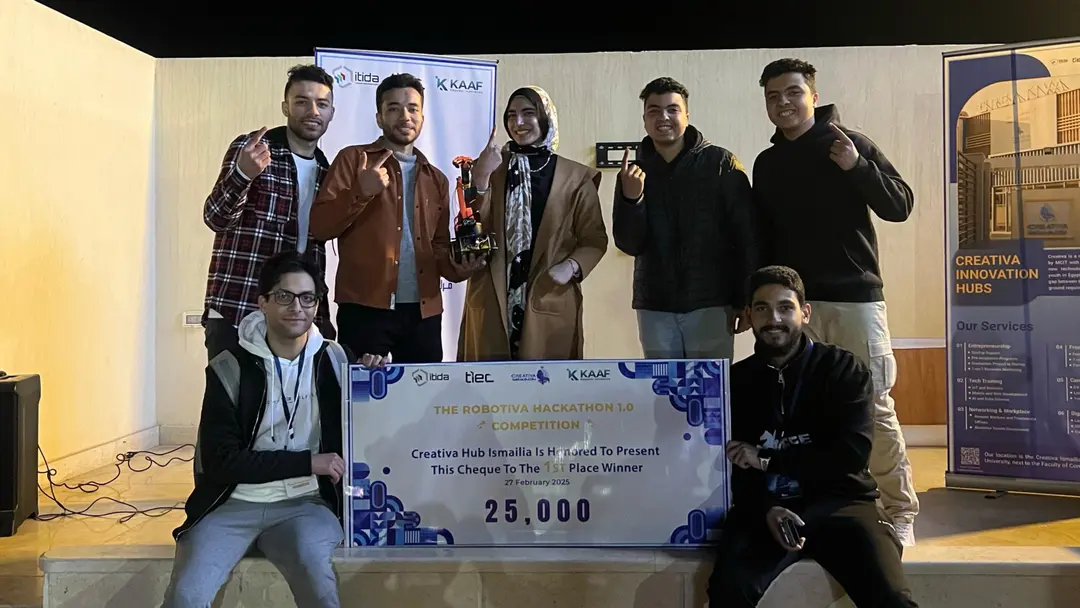
27 Feb, 2025 - Marwan Tamer
RAS
Robotiva Finals Triumph
Our IEEE RAS chapter sent five teams to the prestigious Robotiva competition, and all five teams made it to the finals! With SOUL winning 1st place and Intellibots securing 2nd, RAS once again proved that dedication, teamwork, and relentless learning lead to excellence. This victory isn't just a trophy—it's a statement of what we stand for.
4 Mar, 2025 - Marwan Tamer
RAS
Introducing Our First-Ever PCB Track
This season marks the launch of our brand-new PCB track—a major milestone for the IEEE RAS chapter. Recognizing the growing importance of PCB design in robotics and hardware development, we opened this track to empower our members with vital skills needed to build complete electronic systems.
1 May, 2025 - Marwan Tamer
RAS
Hands-On PCB Workshops: From Schematic to Soldering
To support our new PCB track, we conducted a series of practical workshops that walked members through the complete process of electronics development—from schematics to final soldered prototypes. These workshops were a major stepping stone in cultivating in-house hardware expertise in the IEEE RAS chapter.
19 April, 2025 - Marwan Tamer
RAS
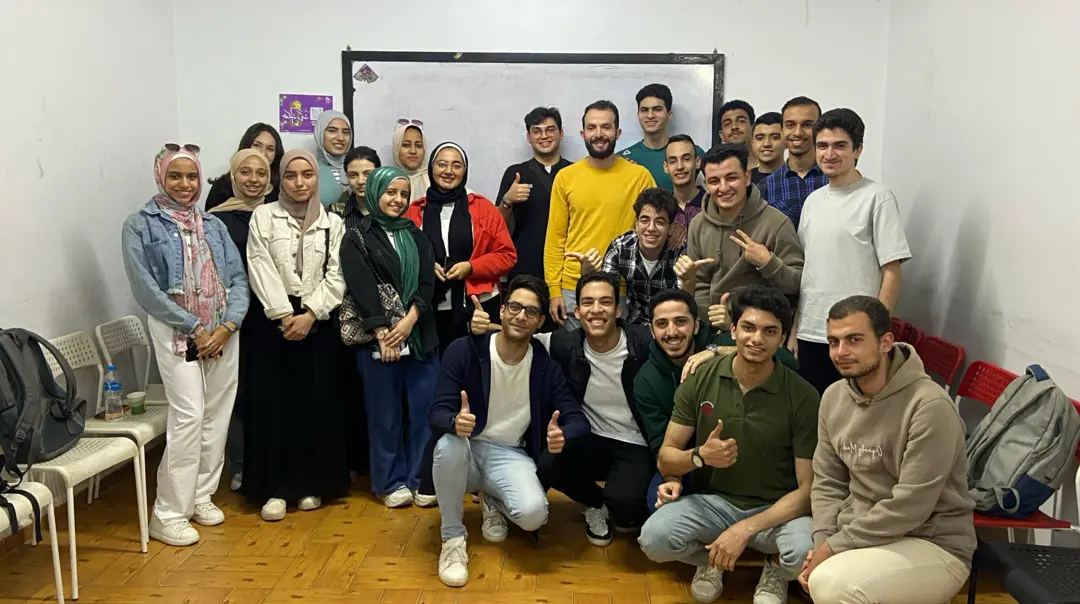
Embedded Systems Masterclass with Eng. Mamdouh
To push our embedded systems learning to the next level, we invited Eng. Mamdouh, a senior embedded software engineer at Arrow Electronics, to host a deep-dive session into practical embedded systems development. This was one of the most anticipated events in our technical calendar, bridging the gap between academic knowledge and real-world embedded applications.


Tracks
Embedded Systems
The embedded systems is a special system that interacts with the physical world. We are designing intelligent systems to do certain function to ensure reliability and efficiency in performing tasks. the main objective is to build a real-time system to ensure accuracy and speed. Our mission is to achieve a low cost system and optimize the software to fit the available resources. Participants engage in interactive sessions led by a professional instructor and attend workshops that offer hands-on experience with microcontrollers. To further enhance their practical skills, they are encouraged to take part in real-world projects and competitions. These activities not only strengthen technical proficiency but also cultivate teamwork and collaboration toward achieving shared goals.

#01
ROS
Robot Operating System is an open-source framework for developing robot software. It provides tools, libraries, and conventions to help developers build complex and intelligent robot systems. ROS supports sensor integration, motor control, computer vision, navigation, and motion planning.
#02
PCB Design
The IEEE Student Branch's PCB Committee teaches you how to design, test, and build professional circuit boards (PCBs). We help members learn to create strong and dependable PCBs for things like embedded systems, robots, and other electronics. You'll get hands-on experience with every step of hardware development. This includes learning how to draw schematics, choose the right parts based on their electrical features and what's available, and carefully arrange the board parts for best performance and easy manufacturing. We also focus on "Design for Manufacturability" (DFM) to make sure designs are not only functional but also cheap and easy to produce. Members will become good at using industry tools like Altium Designer, which is important for professional PCB work, and learn key prototyping methods to check their designs. Our training prepares members for jobs in hardware engineering and electronics design by teaching them real-world industry practices.

#03
Mechanical
The Mechanical track covers the full engineering design pipeline for robotics and electromechanical systems. Members build proficiency in industry-standard CAD and simulation tools, learning to translate ideas into precise 3D models, validate them through structural and fluid analysis, and produce fabrication-ready technical drawings. The track bridges mechanical theory and real-world robotics, equipping members to design reliable mechanisms, optimize components under load, and collaborate with embedded and electrical teams on integrated projects.

#04
IC Design
The IC Design track introduces members to the world of integrated circuit design, from concept to silicon. Starting with the fundamentals of digital logic and CMOS technology, members progress through RTL design, simulation, synthesis, and physical design flows. The track combines theoretical foundations with hands-on use of industry-standard EDA tools, preparing members for careers in chip design, VLSI engineering, and semiconductor research.
#05